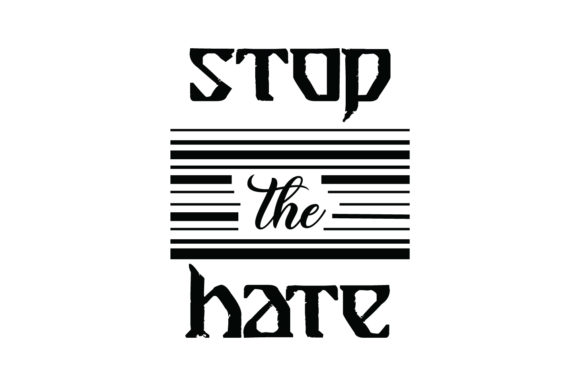
Stop the Hate
As an embroidery designer and product reviewer, I’ve evaluated countless machine embroidery designs. When I first saw "Stop the Hate," it immediately caught my attention—not just for its bold message, but for the visual impact it could bring to a variety of projects. The design has a strong, clean aesthetic that works well in both simple and complex applications.
First Impressions: A Design with Purpose
The first thing I noticed about Stop the Hate is its clear, impactful layout. It’s not overly detailed, but the balance between negative space and defined shapes gives it a modern, professional look. The theme is straightforward—anti-hate messaging—and that simplicity makes it versatile for different types of embroidery projects.
It feels like a design that was made to be stitched on fabric rather than just used as a digital asset. The shape is compact enough to work in small hoop sizes, but it also has enough detail to stand out when larger. It would fit well on items like tote bags, sweatshirts, or baby onesies, where the message can be seen clearly without being overwhelming.
Real-World Use: From Tote Bags to Personalized Gifts
I tested Stop the Hate on a few different fabrics to see how it performed. On a cotton tote bag, it looked sharp and legible, especially when using a darker thread on a lighter background. The design didn’t require too many stitches, which is great for quick projects or for those who want to keep costs down.
For custom apparel, like a sweatshirt or t-shirt, the design holds up well. It’s not too dense, so it doesn’t add unnecessary bulk. I also tried it on a baby onesie, and it worked beautifully—simple enough for a child’s clothing but still meaningful. It could easily be turned into an embroidered patch or a small applique design for a more textured look.
One thing to note is that the design might not be ideal for very small hoop sizes. If you’re working with a 4x4 inch hoop, you’ll need to make sure the design fits properly. Otherwise, it might get cut off or distorted during stitching.
Where to Be Cautious: Fabric and Fit Considerations
While Stop the Hate is a solid design, there are a few situations where it might not perform as well. For instance, on stretchy or thin fabrics, the stitches might pull or pucker. It’s always a good idea to use the right stabilizer to prevent that. Similarly, on dark fabrics, the thread color choice becomes critical—using a contrasting color will make the design pop more.
If you're planning to use this on curved surfaces like caps or hats, you may need to adjust the design slightly to account for the curvature. The corners of the design are clean, but they might not sit perfectly on a rounded edge without some tweaking.
For layered garments or products that require frequent washing, the stitch density is low enough to hold up over time. But if you're using it on something like a kitchen towel or a pillow cover, you might want to consider reinforcing the edges to prevent fraying.
Visual Appeal and Customer Perception
Stop the Hate has a strong visual presence. It’s not just a design—it's a statement. That makes it a great choice for handmade products or personalized gifts that carry a message. Customers often respond positively to meaningful embroidery, and this design could help build trust and connection with your audience.
When it comes to brand consistency, this design works well for businesses that want to promote positive values. It could be used as part of a holiday gift line, a boutique product, or even as a printable mockup for digital product sellers. Its clean lines and bold message make it easy to integrate into different branding strategies.
For Etsy sellers or small shop owners, Stop the Hate could be a valuable addition to your design library. It’s versatile enough to be used in multiple ways, and its simplicity makes it easy to adapt for different customer requests.
Practical Designer Notes: Testing and Preparation
Before using any embroidery file, I always recommend testing it on scrap fabric. This helps you see how the design looks in real life and whether it matches your expectations. With Stop the Hate, I found that it works best when the thread color contrasts well with the fabric.
Check the stitch density to make sure it’s appropriate for your project. If you’re using it on a thick or textured fabric, you may need to adjust the settings to avoid puckering. Also, confirm the hoop size required for your machine—some designs may need a larger hoop than others.
Another tip is to test the design in black and white mockups. This helps you see how it looks without color, which is useful for understanding how it will appear on different fabric backgrounds. You should also compare it on light and dark fabrics to ensure visibility and clarity.
Finally, make sure you understand the licensing terms before selling any finished products or digital files. Even though the design seems straightforward, it’s important to verify that it’s suitable for commercial use.
Final Thoughts: A Design with Wide Application
Overall, Stop the Hate is a practical and meaningful machine embroidery design that can be used in a variety of projects. Whether you're creating custom apparel, personalized gifts, or small business merchandise, this design offers a strong visual statement without being too complicated.
It’s not perfect for every situation, but with proper preparation and testing, it can be a valuable asset in your embroidery toolkit. For crafters, Etsy sellers, and small business owners, this design could help elevate your handmade products and connect with customers who care about meaningful messages.